
0
6 Kinds of Kids’ Worship Leaders (and Why It’s Time to Press Reset)
Share this Post
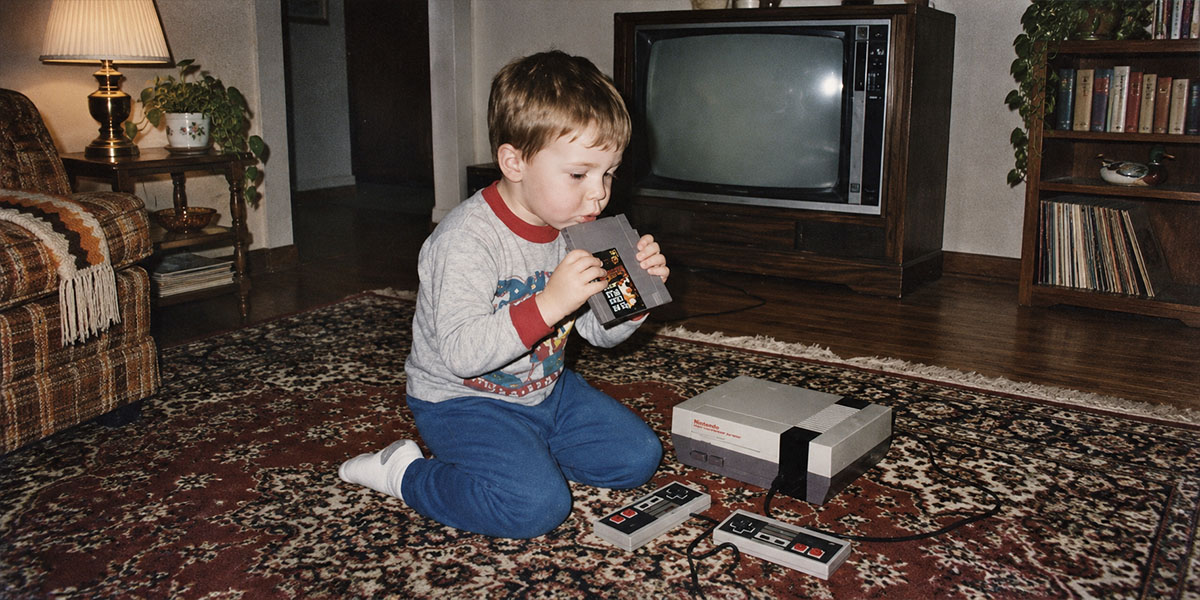
On a crisp fall day in 1991, my sister and I pooled our money, marched down the street to a neighbor’s garage sale, and bought an original 8-bit Nintendo for what now seems like a trifling price: $63. I put in $13. That was all the money I had at the time. My sister covered the remaining $50.
I’ll let you guess which of us got more screen time.
Compared to today’s systems, that Nintendo was a jumble of glitches and quirks. Sometimes a game would start fine, but a few minutes later, an unexplained vertical line would appear across the screen. Then another. Then another, until the picture was so distorted it was impossible to play. (And no child of that era can forget the only surefire troubleshooting solution: blowing on the cartridge.)
When that happened, there was only one solution: reset.
Over the last few decades, kids’ worship has experienced the equivalent of those slow-but-steady vertical lines. Our model of church has changed, and the ripple effects have quietly changed the way kids learn to worship. Yet it doesn’t seem that we’ve ever paused to consider those effects. Sunday is coming around again, and it’ll be here before you know it. So on we trudge, while the lines slowly fill the screen and the game keeps getting harder to play.
What changed in kids’ worship?
When I was a kid at tiny Hope Baptist Church in Flanders, New Jersey, I was cast as Jahaziel the priest in the (problematically titled) children’s musical Fat, Fat Jehoshaphat. While waiting backstage, I absentmindedly grabbed a marker and wrote PRIESTS on my right palm and RULE on my left.
Jahaziel had a big solo at the climax of the show. I stepped forward, sang my heart out, and raised my hands on the final note. That’s when I noticed people in the audience leaning forward, squinting, whispering to each other. In a panic, I realized the entire congregation was trying to read my hands.
As embarrassing as that moment was, it was one of a long series of childhood experiences that shaped me as a worshiper: singing alto next to my mom in the pew at age six, playing guitar for the youth group for the first time, pounding an electronic drum kit in our church’s first worship band.
What’s becoming increasingly remarkable is that I had those opportunities at all. Two big shifts have happened since then.
First, worship has become segmented by age. One informal survey found that 56% of churches have separate services for their children. In a 2022 study from Barna and Awana, 88% of parents agreed that “My children’s time in children’s ministry is as important as my time in service.” Notice what the statement itself assumes: that parents and kids are in different rooms.
Second, responsibility for kids’ worship has shifted. It used to belong largely to the worship leader. Now it mostly belongs to the children’s ministry leader, many of whom are under-equipped, undertrained, and under-resourced for it. Meanwhile, worship leaders have been removed almost entirely from any connection with children.
Please hear me clearly: this is not a critique of children’s church. It’s not a nostalgia-laden appeal to return to the days of hymn-singing and vaguely offensive children’s musicals. It’s simply an honest look at the screen.
Kids are always learning something about worship
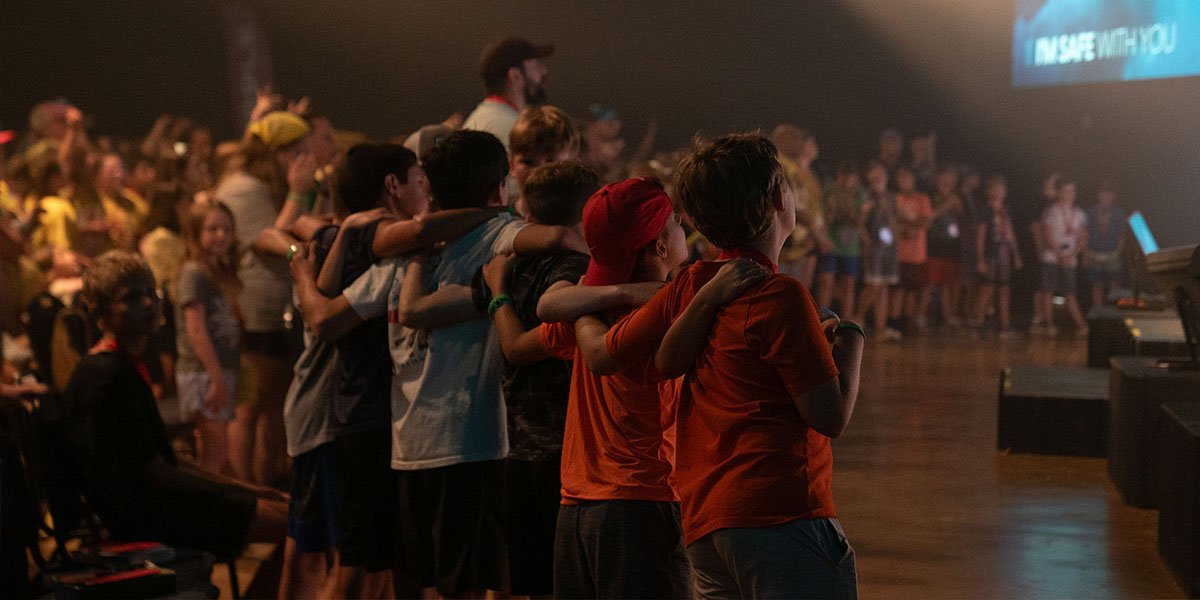
When Jess and I led Sunday worship for the kids at one megachurch, the children stood in the center of the room, engaging half-heartedly, while the adult volunteers stood along the walls, faces buried in their phones like distracted parents at the playground.
That church may not have been intentionally teaching worship to its kids. But make no mistake: the kids were learning a powerful lesson. They were learning that worship is optional for grown-ups.
Children will learn something about worship, whether we teach them or not. Some are learning that worship is something you watch on a screen. Others are learning it’s only for musically talented people, or that it involves little more than bouncing around to the beat.
Have you paused to consider what the children in your church are learning about worship?
Which kind of kids’ worship leader are you?
Over the years, Jess and I have talked with countless children’s ministry leaders and worship leaders. Their stories tend to fall into a few familiar tracks. See if you recognize yourself.
The Insecure Implementer
This is not what you trained for. Your passion is children’s ministry, not worship ministry. Yet here you are, in charge of worship for an entire generation of kids. The only thing that hears you sing is your shower head. (And does every song have to have hand motions?) You’re secretly worried that you’re failing these kids.
The Last-Minute Leader
You’ve been repeating the songs from the VBS curriculum you did ten years ago, and the indifferent looks on your kids’ faces show it. Planning worship falls to the bottom of your list, so you’ll throw something together on Sunday morning. Probably what you did last Sunday.
The YouTube Gambler
You play through the ads before the service and pause right at the beginning of the song. You’ve stressed to Nancy, who runs the computer, to stop the video before YouTube auto-plays something inappropriate. You know it’s not technically the legal way to show videos in a group setting. But what’s the harm?
The Self-Reliant Stress Ball
You plan the service, find the songs, load the videos, make the slides, and come up with the hand motions (then film yourself doing them on your phone, feeling like a giant goober). You lead the songs with a mic in one hand and the motions with the other. Then you teach the lesson, take the offering, and meet parents at the door. It worked for a few weeks. Now you’re exhausted.
The Serial Strategy-Hopper
You’ve. Tried. Everything. Fast songs, slow songs, camp songs, no songs. Songs at the beginning, songs at the end. You even briefly considered pulling out your old recorder from third grade music class. You’re starting to wonder if there’s any way to engage kids in worship.
The Envious Comparison Shopper
If only your ministry could be like that church. You tried their approach, but it never worked for you like it seems to work for them. Now you’re wondering, a little resentfully, if their approach is even biblical. But hold on… there’s a new church in town that’s growing like wildfire. I wonder if we could do that here.
Did you find yourself in one (or more) of these? If I’m honest, I’ve embodied most of them at one time or another. I’ve procrastinated like the Last-Minute Leader. I’ve felt the sinking realization of the Self-Reliant Stress Ball that my capacity had become a ceiling for the ministry. I’ve jumped on bandwagons and looked at other ministries with jealous eyes.
This is not what God wants for your ministry or for you.
Why kids’ worship matters for discipleship
Our mission is to make disciples. But can a person be a disciple without being a worshiper?
Jesus made it clear where a disciple begins: “Love the Lord your God with all your heart and with all your soul and with all your mind and with all your strength” (Mk. 12:30). In its most basic form, worship is experiencing God’s love and responding in kind. Worship is not simply an element of discipleship. It is the lifeblood of discipleship.
And the stakes are real. Barna found that 64% of 18–29-year-olds who grew up in church have withdrawn from church involvement as adults. But those who stayed were far more likely to believe that Jesus speaks to them personally in a way that is real and relevant (68% versus 25%).
That’s relationship. That’s the heart. And that’s exactly what worship nurtures. It’s also why I’m convinced our kids aren’t the church of tomorrow. They’re the church of today.
What does it look like to press reset?
When God wants to do a new thing, he doesn’t just make subtle tweaks to the old paradigm. He presses the reset button.
He did it when he brought his people out of slavery, when he moved from Saul to David, and from the old covenant to the new. Most significantly, he did it in your heart and mine: “If anyone is in Christ, the new creation has come: The old has gone, the new is here!” (2 Cor. 5:17)
If you’re like me, the thought of a reset fills you with both excitement and dread. Great, something else for me to do!
But if that’s your first reaction, you haven’t yet grasped how deep this reset goes. We don’t need to exchange one to-do list for another. We need to swap out an entire philosophy of ministry. And if you’re burdened by overwhelming expectations, stretched thin between multiple roles, and beating yourself up because you can’t get it all done, this may be the most freeing moment of your life.
Take a breath. Stretch out your finger. And press the button.
Frequently Asked Questions
Who is responsible for kids’ worship in the church?
In many churches today, kids’ worship falls mostly to the children’s ministry leader. But the biblical mandate to raise up a worshiping generation belongs to the whole church community, including worship leaders, pastors, volunteers, and parents.
Is children’s church bad for kids?
Not at all. Separate kids’ services can be wonderful. The key is being intentional about what kids are learning about worship in those environments, especially by making sure they see adults who genuinely worship.
How do kids learn to worship?
Kids learn to worship mostly by example. The surest way to develop a heart of worship in a child is for them to see a heart of worship in an adult, combined with real opportunities to participate.
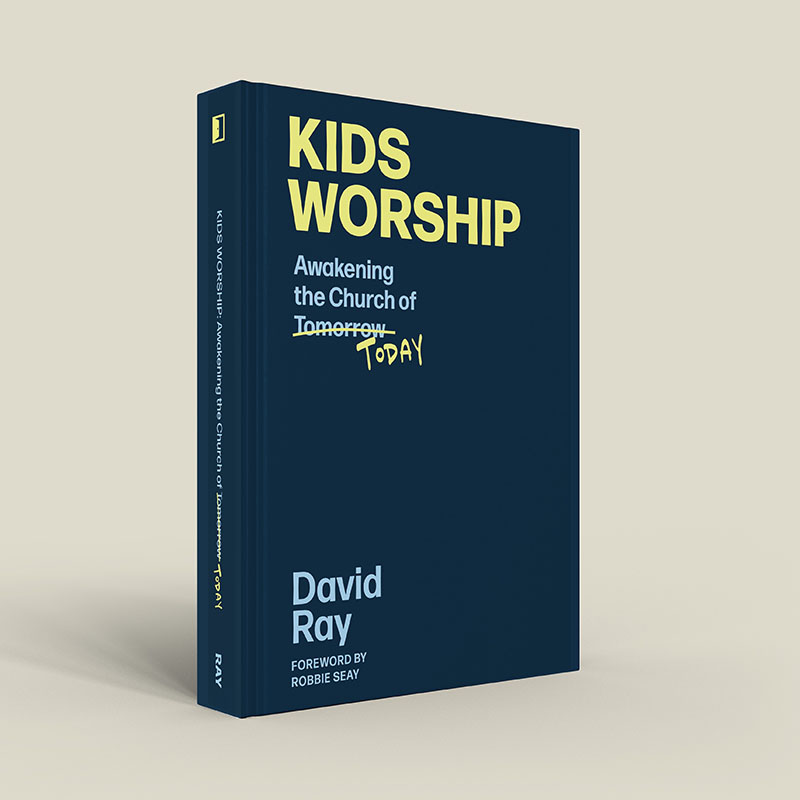
If this is stirring something in you, I explore it more fully in the book Kids Worship: Awakening the Church of Today. And if you’re ready to go deeper, check out the companion Leading Kids in Worship Masterclass.
Share this Post
About the Author